
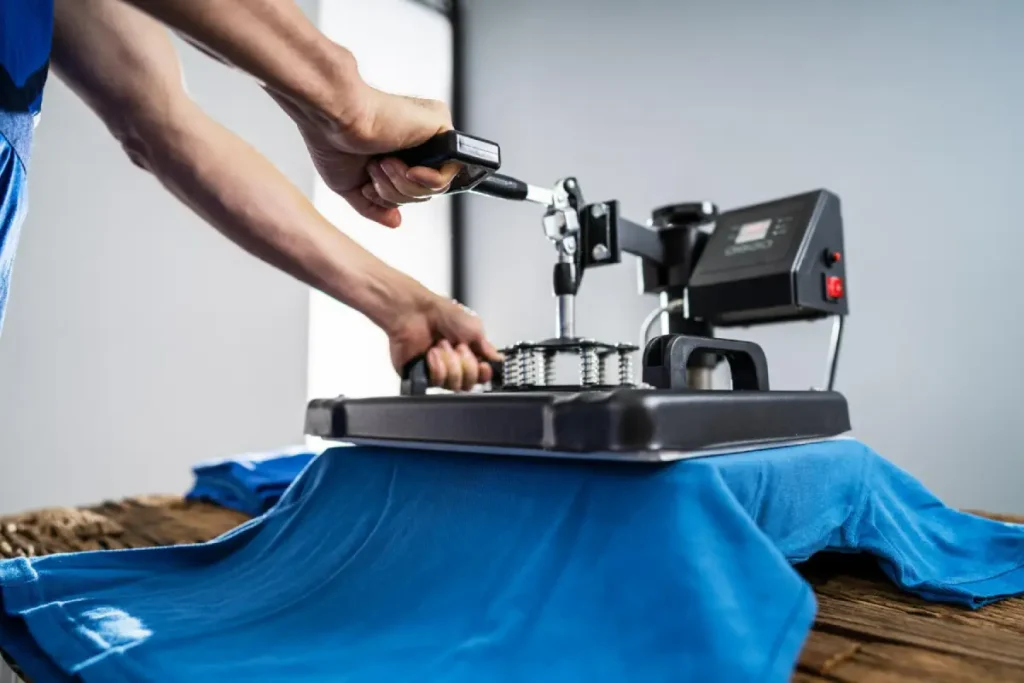
In the high-stakes arena of modern garment decoration, the barrier to entry is no longer capital; it is technical consistency. We have moved past the era where a simple “print-and-press” setup is sufficient for a viable business. To scale into the premium retail market, you must cease thinking of yourself as a decorator and start operating as a textile integration specialist. The difference between a retail-grade product and a promotional giveaway lies in the microscopic management of your production variables.
When you process dtf transfers, you are essentially facilitating a high-performance polymer fusion. If the environment, the pressure, and the cooling cycle are not managed with clinical precision, the bond will inevitably fail under the stress of real-world use. Harwin’s philosophy is built on the concept of “Total System Governance”—where your entire workshop is tuned to eliminate the variability that plagues amateur operations.
The Anatomy of an Indestructible Bond
Most print failures are not accidents; they are the result of neglected physical laws. If you want your output to survive the most rigorous retail standards, you must master the mechanics of the bond:
- Atmospheric Shielding: Adhesive powders are highly hygroscopic. If you store your materials in a humid environment, they absorb water vapor, which causes “outgassing” and pinholes during the press. Use vacuum-sealed, climate-controlled storage to maintain your chemistry.
- Platen Balancing: A standard heat press often suffers from “edge-drop,” where the edges of the platen are cooler and exert less pressure than the center. Utilize force-sensitive film to identify these dead zones and ensure your design is always placed in the “optimal bonding zone.”
- The Dwell-Time Recovery: Most operators fail to account for the platen’s temperature drop upon contact with the garment. Your “dwell-time” must account for this recovery period to ensure the adhesive actually hits its required melting point—not just the surface temperature of the press.
Velocity as a Strategic Asset
The traditional apparel supply chain is a relic. The “bulk order” model ties up your cash, increases your storage costs, and exposes you to the risk of unsold inventory. Searching for dtf transfers near me is the most effective way to shift your brand into a “Demand-Pull” manufacturing model. By collaborating with a regional partner who possesses industrial-grade curing and printing capabilities, you turn your brand into an agile, capital-efficient powerhouse.
This proximity is your “secret weapon” for market research. You can test new ink densities, film bases, or matte-additive finishes with your local partner in real-time, receiving feedback and iterating before your competitors have even sourced their raw materials. This operational speed—not just the quality of your design—is what allows boutique labels to successfully challenge established retail giants.
Quality Assurance: Your Primary Marketing Tool
Most brands try to market their way into the retail space. We suggest a different approach: **Market your durability.** If you subject your products to rigorous, industrial-grade stress testing (the “Destroy-Cycle”), you gain empirical proof of your brand’s excellence. When a potential retail buyer asks, “Why should I stock your line?”, you shouldn’t talk about your designs. You should show them your wash-test metrics.
When you present data—such as “this print maintains 99% structural integrity after 50 high-heat industrial cycles”—you fundamentally change the relationship. You are no longer asking for a chance to sell a t-shirt; you are offering a high-performance, long-term asset. This shift in positioning is the secret to commanding the premium pricing that defines a true apparel label.
Frequently Asked Questions
What is the “recovery time” of a heat press and why does it matter?
When you bring a 300°F platen into contact with a room-temperature garment, the platen temperature drops. It takes 2-4 seconds to return to the set temperature. If your dwell-time is too short, you never actually hit the bonding temperature, leading to a weak, “tacky” bond that will peel.
How do I achieve a “retail-soft” hand-feel on large graphics?
The secret is in the “halftone reduction” of the adhesive layer. By using advanced RIP software to generate a dithered base-layer, you reduce the physical amount of TPU adhesive, which increases breathability and prevents the print from feeling like a heavy, rigid block.
Why do some fabrics “glaze” or scorch even at lower temperatures?
This is usually due to the pressure setting. Excessive PSI on delicate synthetic fibers can “crush” the weave and permanently alter the fabric texture, creating a visible “press-mark.” Use a lower PSI for synthetics and rely on consistent heat rather than aggressive force.
How often should I verify the calibration of my heat press?
Perform a check with a digital probe thermometer and force-sensitive film every 30 days. Heat press electronics drift, and platen surfaces can warp over time. Treating your equipment as a laboratory instrument rather than a kitchen appliance is the key to consistent, scalable success.
Building a successful, high-quality apparel brand is a journey of continuous technical refinement. By mastering the potential of dtf, you position your brand to compete at the highest level of the custom merchandise market. Harwin is committed to providing the industry insights you need to turn your production floor into a professional, profitable enterprise. Start optimizing your workflow today—your commitment to quality is the most valuable investment you can make for your brand’s future.